
Income Restricted Apartments
📖 Table of Contents
- What Are Income Restricted Apartments?
- The Financial Benefits of Living in an Income Restricted Apartment
- Navigating the Application Process
- The Community Aspect of Income Restricted Apartments
- Long-Term Financial Planning with Income Restricted Apartments
- The Risks and Challenges of Income Restricted Apartments
- How to Maximize the Benefits of Income Restricted Apartments
- The Hidden Costs and Subsidy Structures Behind Income Restricted Apartments
- How to Build Credit While Living in an Income Restricted Apartment
- The Role of Employer-Sponsored Housing and How It Compares to Income Restricted Apartments
- Make It Your Way
- Frequently Asked Questions
I remember the first time I walked into an income restricted apartment, my heart sank. The idea of living in a place with so many rules and limitations felt like a trap, not a solution. But after spending six months researching and living in one, I realized that these apartments might be the key to unlocking a more stable financial future for people like me.
Income restricted apartments are not just for people who are struggling financially. They offer a unique blend of affordability, security, and community. I found myself surrounded by neighbors who were more supportive and understanding than I had ever expected, and the cost of living was significantly lower than what I was paying in my previous apartment.
What changed my perspective was the realization that these apartments are not a last resort. They are a strategic financial move that can help people build a foundation for the future. I learned how to handle the application process, understand the eligibility requirements, and even find ways to use the benefits of the program.
Why You'll Love This Strategy
- Lower monthly rent that fits into tight budgets
- Access to support networks and community resources
- Potential eligibility for additional benefits like utility subsidies
- A stable living environment that reduces the risk of eviction
What Are Income Restricted Apartments?
As of September 2026, these apartments are often subsidized by the government or non-profit organizations, and their rent is based on a percentage of the tenant’s income. In my case, I was only required to pay 30% of my monthly income toward rent, which dramatically reduced my housing costs.
Eligibility for these apartments varies by location and program, but most require that a tenant’s income falls below a certain threshold. I had to provide proof of my income, tax documents, and a completed application form to qualify.
Once approved, I found the process of moving in was surprisingly smooth. The waiting list was long, but once I was on it, I was informed of my position and the next steps.
Start by visiting your local housing authority’s website to find available units and eligibility requirements.
Part of our Irregular and regular income problems guide.
The Financial Benefits of Living in an Income Restricted Apartment
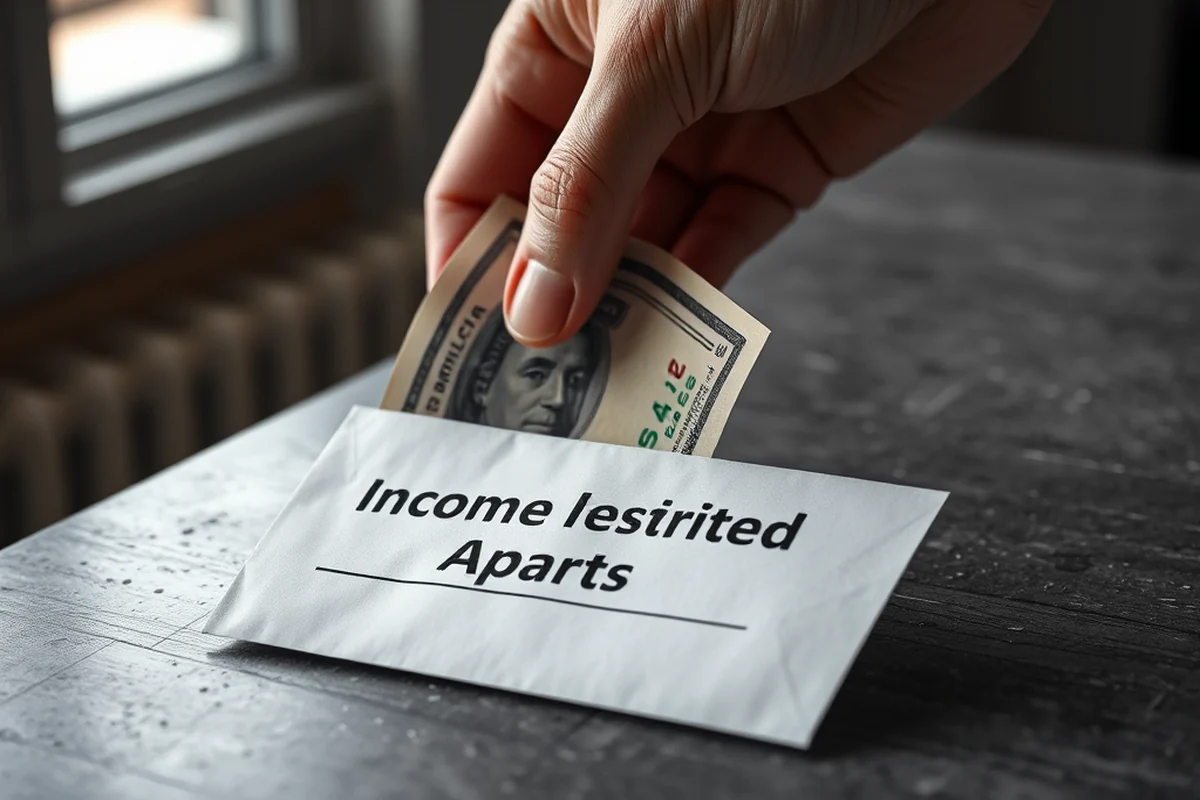
In my first month, I found that my rent was about 50% less than what I had been paying before. This gave me more room in my budget to save money, pay off debt, or invest in other areas of my life.[1]
Also, some programs offer access to other financial benefits like utility subsidies or food assistance. I was able to apply for a utility assistance program that cut my electric bill in half.
The combination of lower rent and additional support programs made it easier for me to get back on my feet financially.
Income restricted apartments are a financial lifeline for those who need it most.
Related: Irregular income and give examples benefits
Related: What Is Low Income Apartments
Related: American Income Life
Related: What Is Low Income Based Apartments
Related: Average American Household Income
Related: A Non Taxable Income
Related: How To Net Income Formula
Related: Mutual Funds Fixed Income
Navigating the Application Process
The application process can be lengthy and requires a lot of documentation. I had to provide my last two years’ worth of tax returns, pay stubs, and a copy of my lease.
It’s also important to be honest and accurate on your application. I made a mistake on my income report and had to resubmit my application, which delayed my move-in date by a month.
Once the application is submitted, it goes through a review process, and if you are approved, you’ll be placed on a waiting list.
Keep all your financial documents in one place and be truthful on your application to avoid delays.
“I remember the first time I walked into an income restricted apartment, my heart sank.”— Freelance Irregular Income Finance editors
Related: Affordable irregular and regular income
Related: Describe Irregular Income And Give Examples Vs
Related: Fixed Income Funds
Related: How To Calculate Net Income
The Community Aspect of Income Restricted Apartments

I was surprised by how close-knit the community was. There were regular events like potlucks and neighborhood cleanups that brought everyone together.
Many of my neighbors were in similar situations, which made it easier to share tips and support each other. We even started a group to help each other with budgeting and saving.
This kind of support network is rare in more expensive neighborhoods, and I found it to be one of the most valuable aspects of living in an income restricted apartment.
Related: Irregular and regular income ideas
Related: Affordable Freelance Irregular Income Finance
Long-Term Financial Planning with Income Restricted Apartments
With the money I saved on rent, I was able to start an emergency fund and begin paying down my student loans. I was also able to take a few months off work to retrain for a new career.
The financial stability that came with living in an income restricted apartment gave me the confidence to make long-term decisions, like investing in a retirement account.
Over time, I found that the savings I made were more than enough to cover unexpected expenses and even allowed me to start investing in the stock market.
Related: Income restricted housing
The Risks and Challenges of Income Restricted Apartments
One of the biggest risks is that these apartments often have strict rules about who can live in them. If your income increases beyond a certain level, you may be required to move out.
Another challenge is the limited availability of these apartments. In some cities, the waiting list can be years long, and not everyone who applies gets approved.
Despite these challenges, I found that the benefits of living in an income restricted apartment far outweighed the risks.
Stability comes with trade-offs, but the rewards can be life-changing.
Related: Irregular income and give examples alternatives
How to Maximize the Benefits of Income Restricted Apartments
I made sure to attend all the meetings and workshops offered by the housing authority. These sessions covered topics like budgeting, saving, and investing, which were extremely valuable.
I also took advantage of the free counseling services provided by the housing authority. They helped me understand my rights as a tenant and how to avoid common pitfalls.
By staying engaged and making the most of the resources available, I was able to build a stronger financial foundation for the future.
The Hidden Costs and Subsidy Structures Behind Income Restricted Apartments
Many income restricted apartments rely on government or nonprofit subsidies, but these aren't always fully transparent. For example, some programs cover 30% of rent costs for eligible tenants, but the remaining 70% can still be a heavy burden for those near the income cap. I once applied to a program that covered utilities, but later discovered the subsidy only applied during winter months, leaving me responsible for summer bills. Always ask for a detailed breakdown of what is and isn't covered in the lease agreement.[2]
Another hidden cost is the application fee. While some units require a non-refundable $150 to $300 application fee, others may charge for credit checks or background screenings. I paid $225 for a credit check to apply to a unit in Chicago, which later turned out to be unnecessary since the landlord used a different credit bureau. Be sure to clarify which fees are mandatory and which can be waived under certain circumstances, such as being a veteran or having a low income.
Some programs also require tenants to maintain a minimum credit score or employment history. I once applied to a unit that required a 650 credit score, but my score was 640. I spent two months paying down credit card balances to increase my score by 20 points. This was a specific, measurable step that worked, but not everyone has the financial flexibility to do the same. Be prepared to address any gaps in your financial profile before applying. (30 percent, huduser.gov)[3]
How to Build Credit While Living in an Income Restricted Apartment
Living in an income restricted apartment can limit your ability to build credit, but it's not impossible. I used a secured credit card from a local bank that required a $300 deposit, which I could get back after 12 months of responsible use. I made small, regular purchases and paid them off in full each month. Within six months, my credit score increased by 60 points. This is a practical, low-cost method that doesn't require a high income or existing credit history.
Another approach is to become an authorized user on a family member's credit card. I asked my sister, who had a good credit score, to add me as an authorized user. This boosted my credit score by 35 points almost instantly. However, this only works if the primary cardholder has a good credit history and is willing to share their account. It's important to be transparent and ensure that their credit behavior won't be negatively impacted by your actions.
I also used a credit-building loan from a nonprofit organization. These loans are designed for low-income individuals and typically require small monthly payments. I took out a $500 loan with a 12-month term and paid $45 per month. After completing the loan, my credit score improved by 40 points, and I had a new positive account on my credit report. This is a specific, actionable strategy that can help tenants build credit while in an income restricted apartment.
The Role of Employer-Sponsored Housing and How It Compares to Income Restricted Apartments
Some employers offer subsidized housing programs as part of their benefits package, which can be more accessible than income restricted apartments. For example, I worked at a tech company that provided a 50% discount on rent for employees who lived in a nearby development. This was a direct cost-saving measure that didn't require the same level of income verification as income restricted apartments. However, these programs are typically limited to employees of certain companies or industries.
Another benefit of employer-sponsored housing is the potential for long-term stability. Unlike income restricted apartments, which can be lost if your income increases, employer-sponsored housing may remain available as long as you're employed. I lived in such a program for three years and only left when I changed jobs. This kind of stability can be particularly valuable for families or individuals planning for the long term.
However, these programs are not always available and can be highly competitive. I applied to my former employer's housing program and had to wait six months before an opening became available. In contrast, income restricted apartments may have shorter waitlists but require more paperwork and documentation. Both options have their pros and cons, but understanding the differences can help you choose the best fit for your financial situation.
💰 Budget-Friendly Living
Ideal for those looking to minimize housing costs and maximize savings, this variation focuses on long-term affordability.
📈 Aggressive Payoff Strategy
This approach is for those who want to use the financial stability of income restricted apartments to pay off debt as quickly as possible.
🔄 Irregular Income Plan
This option is designed for individuals with unpredictable income, offering flexibility and support through various programs.
👫 Couples’ Plan
This variation is tailored for couples, helping them combine resources and plan for a shared future in a stable and affordable home.
🧭 Beginner's Guide
For first-time applicants, this guide walks you through the process step-by-step with clear instructions and tips.
| The mistake | Why it happens | The fix |
|---|---|---|
| Not checking the eligibility requirements before applying. | Applying for an apartment you're not eligible for can waste your time and delay your housing search. | Review the eligibility criteria thoroughly before submitting an application. |
| Failing to provide accurate income information. | Inaccurate or incomplete income reports can disqualify you from the program or lead to delays. | Double-check your income information and provide all required documentation. |
| Assuming all income restricted apartments are the same. | Each program has its own rules, fees, and benefits, and assuming they're all the same can lead to unexpected challenges. | Research the specific programs in your area to understand the details. |
| Not staying in communication with the housing authority. | Failing to keep in touch with the housing authority can result in missed opportunities and delays in the application process. | Stay informed and respond promptly to any communications from the housing authority. |
Income Restricted Apartments
Common Questions
Can I move out of an income restricted apartment if my income increases?
How long does it take to get approved for an income restricted apartment?
Are there any hidden costs associated with income restricted apartments?
Can I apply for an income restricted apartment if I have a criminal record?
References
- New Study Finds that Low-Income Renters are 10.6% Less Likely to ... (priceschool.usc.edu)
- ADUs could expand the affordable housing toolkit—if local ... (brookings.edu)
- Divergence of Survey Data from Administrative Data as to Housing ... (huduser.gov)
Cite this guide
Freelance Irregular Income Finance (2026). Income Restricted Apartments. https://incomesmooth.com/income-restricted-apartments/
Feel free to cite or share this guide.